
Pyometra in Dogs – What is it? And why neutering is important
Pyometra is one of the most serious health risks in unspayed female dogs. It may start with mild signs such as drinking more water, eating less or seeming quieter than usual, but it can quickly become a life-threatening emergency.
What is pyometra and how does it happen?
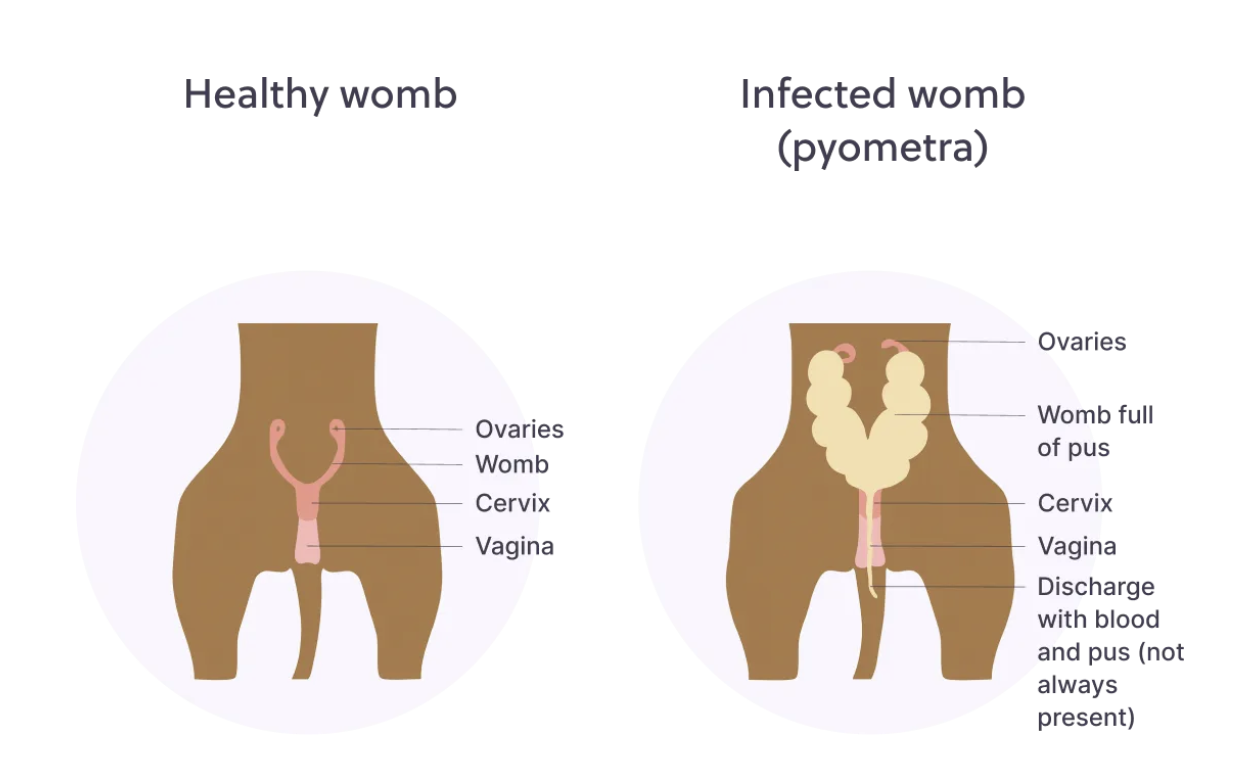
Pyometra – is an infection of the uterus where bacteria multiply and the uterus fills with infected fluid and pus. It usually happens several weeks after a heat cycle due to hormonal changes of progesterone that make the uterus more vulnerable to infection.
There are two possible types of pyometra:
Open pyometra: The cervix remains open, allowing infected discharge to drain from the vulva. This can make the condition easier to notice, as usually owners report yellow-dark brown discharge coming out from vulva.
Closed pyometra: The cervix is closed, trapping infection inside the uterus. Because there is no discharge, owners may not realise anything is wrong until the dog becomes very sick. This type is especially dangerous because the uterus can become enlarged quickly and may rupture.
Signs to watch for
Contact your veterinarian if your unspayed female dog develops:
- Yellow, brown, or bloody discharge from the vulva
- Increased thirst or urination
- Reduced appetite or refusing food
- Lethargy or weakness
- Vomiting or diarrhoea
- Fever
- Swollen or painful abdomen
- Collapse or extreme weakness (emergency)
How is pyometra diagnosed?
Your veterinarian may use:
🩺 Physical examination and history (especially timing after heat cycle)
🩸 Blood tests to check for infection and organ function
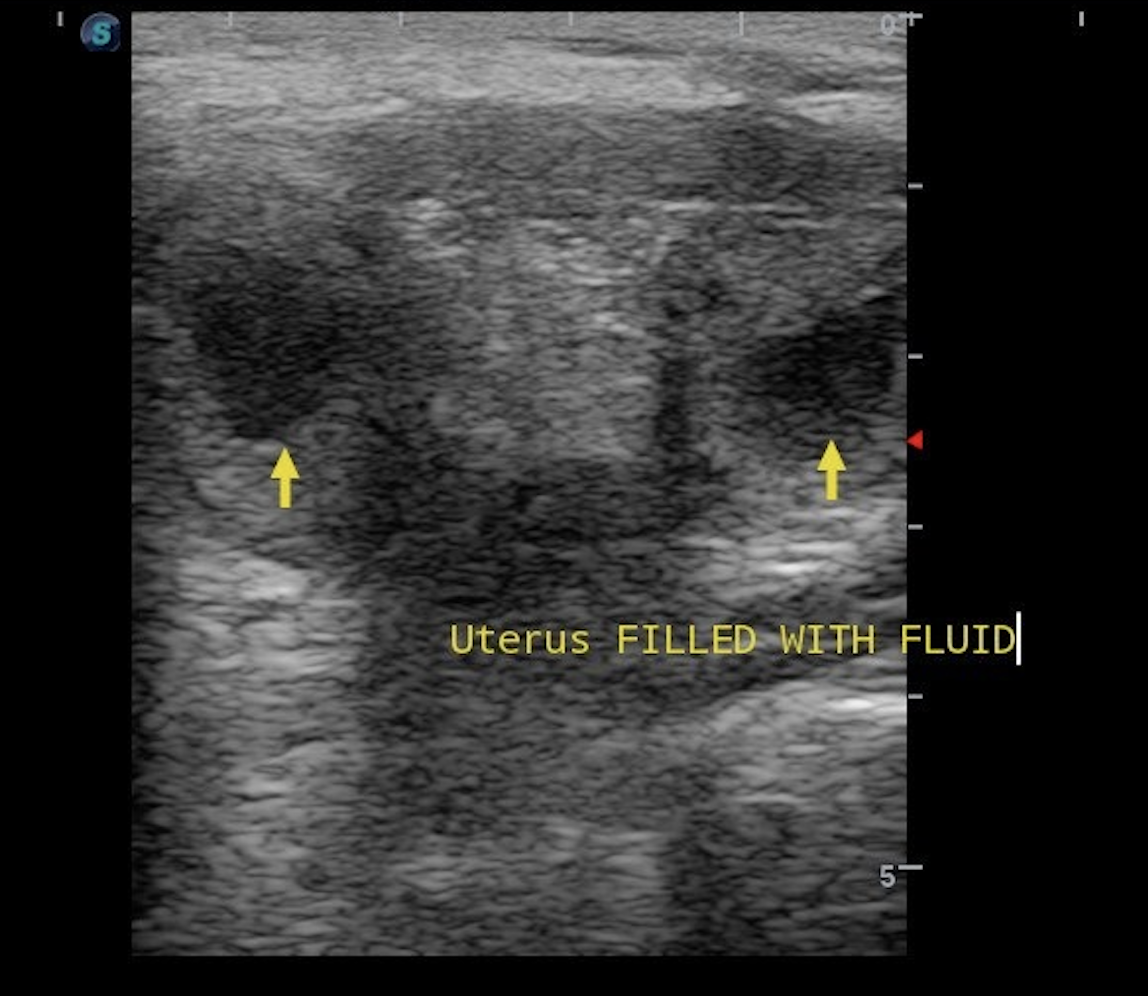
🖥️ Ultrasound to identify an infected, fluid-filled uterus
How is pyometra treated?
The safest and most effective treatment is usually emergency spay surgery (removing the uterus and ovaries).
Because these dogs are often very unwell, they may need:
- Intravenous fluids
- Antibiotics
- Pain relief
- Careful monitoring before and after surgery
Most dogs recover very well when treatment is started early.
In very few and selected cases, veterinarians may attempt medical management using hormone therapy to help expel the infected material from the uterus, alongside antibiotics, intravenous fluids and intensive monitoring. However, this approach carries a significant risk of treatment failure and recurrence, thus surgical removal of the uterus and ovaries remains the safest and most reliable treatment option.
Can pyometra be prevented?
Yes. Spaying female dogs prevents pyometra because the uterus, the organ where the infection develops, is removed. Spaying also prevents unwanted pregnancies and reduces the risk of some reproductive diseases, including uterine and ovarian tumours.
The message for owners
If your female dog is not spayed, speak with your veterinarian about the benefits of neutering and the health risks associated with remaining unspayed. Understanding the warning signs of pyometra could one day save your dog’s life. If your dog seems unwell, is drinking more water than usual, has a reduced appetite, becomes lethargic, or develops any abnormal discharge from her vulva, seek veterinary attention promptly. Early diagnosis and treatment can make a critical difference to the outcome.